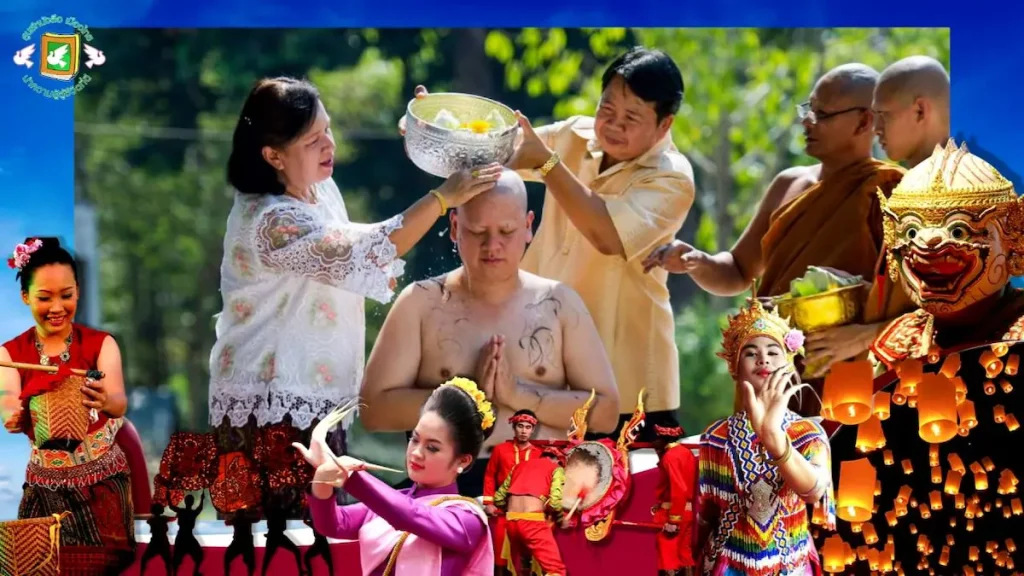
 Thailand welcomes millions of visitors with famous warmth, and understanding Thai cultural traditions will deepen every interaction you have there. Behind the smiles is a society shaped by Buddhism, respect for elders and the monarchy, and a love of festivals, food, and community. You do not need to master every custom before you arrive. You need a handful of key ideas: how to greet people, how to behave in temples, what the festivals mean, and which small gestures earn genuine respect. This guide covers them in plain, practical language.
The Wai and the Language of Respect
The wai, palms pressed together with a slight bow, is Thailand’s greeting, apology, and thank-you in one graceful gesture. The height of the hands and depth of the bow reflect the other person’s status: fingertips at chest level for peers, higher for elders and monks. As a visitor, return a wai when one is offered to you, except from children and service staff, where a smile and nod are enough. Combined with the polite particles khrap for men and kha for women at the end of sentences, even a few Thai words offered respectfully will be warmly received.
Respect in Thailand is physical as well as verbal. The head is considered sacred, so never touch anyone’s head, even a child’s, in affection. Feet are the opposite: never point them at people, Buddha images, or monks, and do not step over anyone sitting on the floor. Remove shoes before entering homes and temple buildings. These rules are easy once noticed, and locals are forgiving of honest mistakes, but visitors who observe them are treated as guests who care. Among Thai cultural traditions, this awareness of body and space is the one you will use every single day.
Temple Etiquette for Calm, Respectful Visits
Thailand’s temples, or wats, are working religious sites, not just photo stops. Dress modestly: cover shoulders and knees, remove shoes before entering the main hall, and sit with legs tucked rather than stretched toward the Buddha image. Speak quietly, do not climb on structures, and ask before photographing ceremonies. Women should never touch a monk or hand anything directly to him; place the item down for him to pick up. A small donation in the box supports the temple and is a kind way to thank the community for welcoming you.
Visiting early in the morning rewards you twice: cooler air and the chance to see daily rituals, including monks collecting alms. Many travellers also stay aware and organised on the road with simple digital habits, the kind covered in guides to evaluating user experience when choosing travel apps and booking tools, because a well-chosen app makes temple opening hours, maps, and translation effortless. Good preparation and good manners work together: plan well, then slow down and be present once you are inside the temple grounds.
Festivals That Light Up the Thai Year
Songkran, the Thai New Year in mid-April, is the country’s most famous celebration: days of water splashing that began as a gentle blessing ritual of pouring water over Buddha images and elders’ hands. Join in with a water pistol, expect to get soaked, and protect your phone in a waterproof pouch. Loy Krathong, on the full moon in November, is its gentle opposite: thousands of small decorated floats with candles and flowers are released onto rivers and lakes, carrying thanks and wishes. Watching a river fill with flickering lights is one of Thailand’s most beautiful sights.
Local festivals add colour in every region, from flower festivals in the north to vegetarian festivals in the south. If your trip overlaps one, build your day around it, arrive early, and eat everything offered. Festivals are also when a little digital awareness helps: busy crowds are prime spots for phone mishaps, so the everyday habits in this guide to password safety for everyday users are worth adopting before you travel, keeping your accounts secure while you focus on the celebration. Respectful, prepared visitors have more fun at festivals, not less.
Respect for the Monarchy, Religion and Elders
Thailand holds its monarchy in deep reverence, and visitors must do the same. Stand respectfully when the national or royal anthem plays in public places like cinemas and train stations, never make jokes or careless comments about the royal family, and treat images of the King, including those on banknotes, with care. Criticism of the monarchy is not merely rude; it is illegal. Similarly, Buddhism is practised by the vast majority of Thais: treat Buddha images as sacred objects, not decoration, and never pose disrespectfully with them.
Within families, elders are consulted and cared for, and merit-making, offering food to monks and supporting temples, is often done in their honour. As a guest in a Thai home, bring a small gift, accept offered food graciously, and compliment the cooking. You will notice how often generosity flows downward and gratitude flows upward, a rhythm that keeps families and communities close. Understanding this rhythm is the heart of Thai cultural traditions: respect is not stiff formality here, it is warmth with structure, kindness with awareness of place.
Everyday Customs: Smiles, Sanuk and Saving Face
Thais value sanuk, the idea that life and work should contain an element of fun, and jai yen, a cool heart: staying calm rather than raising your voice when things go wrong. Public anger achieves little and costs respect. Saving face, for yourself and others, means disagreements are handled gently and privately. Bargain in markets with humour, smile through small frustrations, and you will find problems solved faster than confrontation ever manages. The famous Thai smile has many meanings, welcome, apology, embarrassment, but returning it is always the right answer.
Small daily habits help you blend in: keep your phone and documents organised so border crossings and hotel check-ins are smooth, a chore made easier by tips like those in this browser cache guide for busy adults, which is really about keeping your digital life tidy on the move. Dress neatly, learn to say thank you and hello in Thai, and greet shopkeepers when you enter. None of this is difficult, and together it changes how you are received, from tourist to welcomed guest, everywhere from Bangkok malls to village markets.
Conclusion
Thai cultural traditions ask little of visitors and give much in return: return the wai, respect temples, monks, elders, and the monarchy, keep a cool heart, and join festivals with joy and care. Learn these basics before you land, practise them with a smile, and Thailand will show you the warmth it reserves for guests who try. Your trip will be richer, your welcome warmer, and your memories far deeper than any photograph.