 Your first taste of authentic Thai food in Thailand can be a revelation: brighter, hotter, fresher, and more balanced than most versions abroad. Thai cooking plays sweet, sour, salty, and spicy flavours against each other in every dish, often in a single spoonful. For beginners, the menu can look overwhelming, with dozens of curries, soups, salads, and stir-fries. This guide introduces the classic dishes to try first, explains how spice really works, and shows you how to eat like a local, from Bangkok street stalls to family kitchens in the north and south.
The Flavour Balance Behind Every Dish
Every Thai cook balances four tastes. Sour comes from lime and tamarind, salt from fish sauce and soy, sweetness from palm sugar, and heat from chillies. A dish is adjusted at the end, tasted and corrected, the way you might season soup at home but with far more precision. On most tables you will find a condiment caddy with sugar, chilli flakes, fish sauce with chillies, and vinegar with chillies, so you can tune your own bowl. Use it: customising your dish is not rude, it is expected, and it is the fastest way to learn what balance tastes like.
Fresh herbs and aromatics do the rest of the work: lemongrass, galangal, kaffir lime leaves, Thai basil, coriander root, and garlic appear again and again. Rice is the foundation, steamed jasmine rice for most meals, sticky rice in the north and northeast, where it is rolled into small balls and used to scoop up dishes. Once you understand this structure, authentic Thai food stops being mysterious. Every new dish becomes a variation on a balance you already know, and ordering becomes an adventure instead of a gamble.
Soups and Curries to Try First
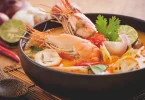
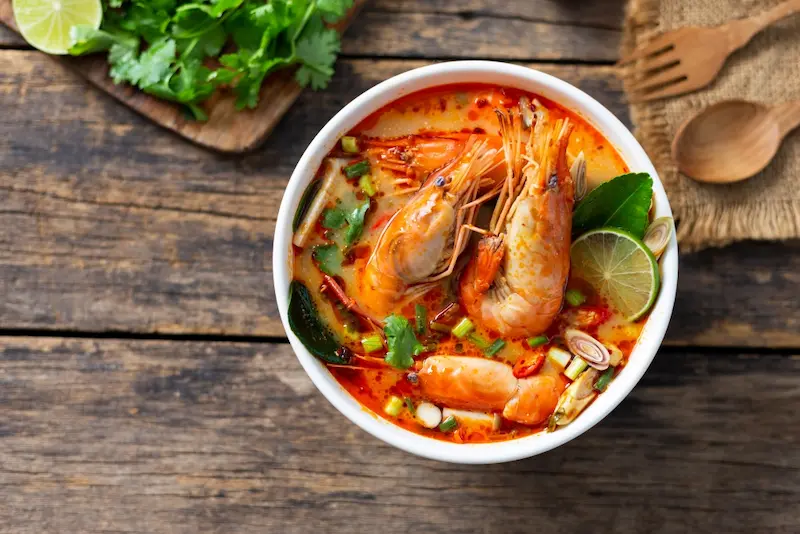
Start with tom yum goong, the famous hot and sour prawn soup, fragrant with lemongrass and lime, and its richer cousin tom kha gai, chicken in coconut galangal soup, which is gentler for spice beginners. Among curries, gaeng keow wan, green curry, is sweet, aromatic, and fiery; massaman curry, with cinnamon, cardamom, and peanuts, is mild, rich, and beloved by first-timers; and red curry with bamboo shoots shows the savoury depth Thai curries can reach. Order curries with rice, share several dishes family-style, and let everyone taste everything.
Regional differences reward exploration. Northern khao soi, a curry noodle soup topped with crispy noodles, pickled mustard greens, and lime, is many travellers’ favourite dish of the whole trip. Northeastern som tam, green papaya salad pounded with chillies, lime, and fermented fish sauce, is fiercely spicy and utterly addictive once your palate adjusts. Southern curries are the hottest and most seafood-rich in the country. A traveller eating region by region discovers that authentic Thai food is really many cuisines in one, each shaped by local ingredients, neighbours, and history.
Noodles, Stir-Fries and Street Food Classics
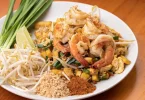
Pad thai is the dish most visitors know: rice noodles stir-fried with tamarind, egg, bean sprouts, chives, and peanuts, with prawns or chicken. In Thailand it is tangier and less sweet than many overseas versions, and a squeeze of lime and a spoon of chilli flakes bring it alive. Equally worth trying are pad see ew, wide noodles in dark soy with Chinese broccoli, and rad na, noodles in silky gravy. For rice lovers, pad kra pao, holy basil stir-fry with minced pork or chicken, topped with a crispy fried egg, is the everyday lunch of millions of Thais, and possibly the best fast meal on earth.
Street stalls are where these dishes shine, cooked to order in roaring woks in under two minutes. Choose busy stalls with high turnover, watch your food being made, and do not fear the plastic stools; some of the finest meals in Bangkok are eaten on them. While you explore, keep your travel admin tidy: saving stall locations and maps offline helps, and small digital habits like those in this digital wellbeing guide for smarter browsing help you enjoy the food instead of staring at a loading screen. Street food rewards the curious and the organised in equal measure.
How to Handle the Heat Like a Local
Thai spice is real, and the phrase pet nit noi, a little spicy, will save you regularly. Learn the scale: mai pet is not spicy, pet nit noi is a little, pet klang is medium, and pet mak is Thai-level hot, which beginners should approach with respect. If a dish overwhelms you, eat plain rice or a cucumber slice, drink something sweet or milky, and never down water in panic, which spreads the heat. Coconut-based dishes and sticky rice are natural fire extinguishers, which is why they accompany the fiercest salads and curries.
Your tolerance will grow surprisingly fast. By the second week, dishes that seemed fiery on day one taste balanced, because you begin to taste the flavours around the heat. Order one adventurous dish per meal alongside safer choices, share everything, and you will climb the ladder comfortably. Also remember that Thais adjust dishes at the table, so a dish served mild is not unfinished; it is waiting for your personal tuning. That philosophy, balance chosen by the eater, is central to authentic Thai food and part of what makes eating in Thailand so enjoyable and personal.
Eating Well and Staying Comfortable
A few practical habits keep your food adventure happy. Drink bottled or filtered water, enjoy ice from reputable places, it is factory-made and safe, and eat freshly cooked food served hot. Wash hands or use sanitiser before meals, especially at markets. If your stomach is delicate, introduce fermented and very spicy dishes gradually rather than all on the first day. Vegetarians should learn the word jay or mangsawirat and be aware that fish sauce hides in many dishes; showing a translated dietary card on your phone works wonders in small eateries.
Planning helps too. Save restaurant locations, translate menus with your phone camera, and keep booking details accessible, the same organised approach praised in guides to evaluating user experience when picking travel tools. Pay attention to how locals order, copy combinations that look good, and ask stall owners what they recommend; pride in their food is universal, and the recommendation is almost always the best thing they make. Tipping is not obligatory, but rounding up or leaving small change at stalls and family restaurants is a kind, appreciated gesture.
Conclusion
Authentic Thai food rewards beginners who learn its balance, start with the classics, respect the heat, and eat where locals eat. Try the soups and curries, chase the great noodle stalls, tune each dish at the table, and explore region by region as you travel. Within days you will be ordering with confidence and squeezing lime over your pad thai like you were born to it. That is the real souvenir Thailand’s kitchens offer: a palate permanently raised, and a standard for flavour you will chase for the rest of your life.