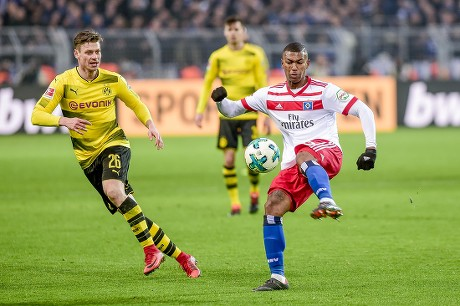

The 2017/18 Bundesliga season produced 855 goals over 306 matches—about 2.79 per game—so accumulator tickets had plenty of drama built in before you even chose your legs. In that kind of high‑event environment, the difference between a parlay that blows up on one predictable weak point and one that fails only when several independent reads go wrong is mostly about how well you diversify risk across leagues, match types, and markets.
Why Risk Diversification Matters More Than Just “Good Picks”
A parlay can be full of individually reasonable ideas and still be structurally fragile if all of them depend on the same condition—for example, a set of overs on a weekend when weather depresses scoring, or several big favourites that all rely on aggressive pressing. Diversification is about breaking that single point of failure: choosing legs that draw on different strengths (home advantage, defensive solidity, attacking superiority, totals) so that one mis‑read does not automatically imply that the others are likely wrong. The cause–effect structure is simple: when legs are less correlated, the probability that all of them fail at once more accurately reflects the independent quality of your reasoning rather than one shared mistake.
Reading the 2017/18 Bundesliga Environment Before Designing Parlays
Bundesliga 2017/18 was not just high‑scoring; it was tactically diverse. Bayern dominated and secured the title early, while mid‑table teams combined compact defending with sharp transitions, and others leaned into high pressing or deep blocks. That mix created matches where favourites usually won but also fixtures where small tactical gaps or motivation differences mattered more than league positions. For a diversified parlay, this environment encourages mixing legs drawn from different archetypes—dominant home favourites, structured underdogs, and carefully chosen totals—instead of stacking multiple versions of the same story.
Table: Match and Market Archetypes for Risk-Spreading Parlays
To move from abstract diversification to something usable, it helps to classify the main archetypes of legs you might build from a 2017/18‑style Bundesliga season.
| Archetype type | Example traits in 2017/18 context | Role in a diversified parlay |
| Strong home favourite (1X2 or -0.5) | Big xG edge, controlled defence, rested line‑up | Anchor leg: main source of stability |
| Compact home side vs leaky visitor (DC or +handicap) | Organised host, visiting team concedes many big chances | Buffer leg: increases hit rate with moderate odds |
| Total goals leg (over/under) | Clear tempo pattern, strong attacking or defensive profiles | Diversifier: outcome driven by game pace, not match winner |
| High‑variance underdog shot | Underdog with specific tactical edge but low base odds | Optional satellite: included only in small, speculative slips |
Interpreting this table, a risk‑aware parlay usually leans on the first two archetypes for its core and uses totals as orthogonal legs, while leaving high‑variance underdogs to separate, low‑stake tickets. That way, risk is spread across different mechanisms—dominance, organisation, and tempo—rather than concentrated in one.
Stepwise Framework: Building a Diversified Bundesliga Parlay
A parlay built “from the top of your head” is almost always more correlated than it looks, especially in a single league. A stepwise framework forces you to think about which dimensions each leg covers and how they interact.
The easiest way to picture this is as layering: you start by defining your risk budget, then you add anchor legs, then diversification legs, and finally you decide whether speculative elements belong at all. At every layer, the question is not just “is this a good idea?” but “does this idea rely on the same assumptions as the others?”
- Set a clear parlay purpose and size
Decide upfront whether this ticket is meant to be a main, moderately aggressive parlay or a small speculative side bet, and fix both leg count and stake accordingly. This anchors how much risk you are willing to accept before you see any fixtures. - Identify anchor legs from structurally strong favourites
From the round’s fixtures, shortlist one or two matches where a home favourite or clearly superior side has both strong xG data and stable defensive structure, and where motivation is intact. Express those edges through 1X2 or modest handicaps rather than relying on big lines that need dominant wins. - Add balance legs that lean on defensive solidity or double-chance
Next, look for compact home or away sides facing opponents with poor chance suppression, and consider double‑chance or small positive handicaps rather than chasing upset wins. These legs often have higher hit rates and help smooth the overall risk profile of the slip. - Introduce a totals leg driven by game pace
To diversify away from pure match‑winner risk, pick a match where tempo and attacking style create a strong case for a particular total—over or under—independent of which team wins. This leg is tied to scoring patterns rather than to the same dominance assumptions that drive your anchor legs. - Check for hidden correlation
Review the ticket and ask whether several legs implicitly depend on the same condition: for example, all favourite wins, all overs, or all results for teams coming off European matches. If so, adjust by replacing or re‑scoping some legs, aiming for a mix of winners and totals and a mix of tactical drivers. - Test odds vs realism
Convert the combined odds into an approximate implied hit probability and ask whether, given your reasoning, that feels realistically beatable, not just exciting. Legs that feel justified singly but absurd collectively usually signal that correlation or overconfidence is still present. - Record the rationale
Note which leg type each selection represents—anchor, buffer, or diversifier—so that when you review results over time, you can see whether specific layers of your diversified structure are under‑ or over‑performing.
Used consistently, this framework prevents you from building parlays that are secretly just concentrated bets on one idea, even when they span several matches.
Using a Betting Destination to Enforce Diversification Rules
Even a sophisticated framework can be undermined if your execution environment actively encourages adding more legs or mirroring promotional “big win” structures. A bettor trying to spread risk across different match types in a 2017/18‑style Bundesliga round needs an interface that can be used deliberately rather than reactively. In a scenario where your analysis is generated elsewhere, one practical approach is to treat app แทงบอล as a betting destination where you implement pre‑planned parlay structures: you arrive with a fixed template (for example, two anchors, one buffer, one totals leg), build exactly that combination, verify that each leg matches its intended role, and then stop rather than letting on‑screen suggestions reshape your carefully diversified design.
Where Diversified Bundesliga Parlays Still Fail
Diversification spreads risk; it does not cancel it. In a league averaging nearly three goals per game, red cards, penalties, and late equalizers routinely flip both winners and totals, meaning even orthogonal legs can fall in the same ninety minutes. Moreover, your diversification is only as good as your understanding of underlying relationships: two bets you view as independent—say, a favourite win and an over goals line—may both hinge on the favourite’s attack functioning well on the day. The impact is that risk‑aware parlays are still high‑variance products; the difference is that, over time, their outcomes are more tightly linked to the quality of your multiple lines of reasoning rather than to one repeated assumption.
Comparing single-league diversification and cross-league diversification
Spreading risk within one league is helpful, but it is not the only dimension. Single‑league diversification—mixing winners and totals, favourites and structured underdogs in the 2017/18 Bundesliga—reduces reliance on one type of match script but still ties you to the league’s overall scheduling, weather, and tactical trends. Cross‑league diversification—combining, say, Bundesliga and another competition—can further separate legs, because different leagues have different scoring environments and tactical identities. However, it also increases information demands: unless your knowledge and data are equally strong across competitions, you might simply be swapping concentrated expertise for thinner, more error‑prone coverage.
Integrating Bankroll Management into Diversified Parlay Use
Risk spreading inside the ticket needs to be matched by risk limits outside it. Because parlays have lower underlying hit rates than singles, each diversified slip should still represent only a small portion of your overall bankroll, even if its internal structure is sound. One workable model is to allocate fixed, modest percentages of capital to pre‑defined parlay types—main diversified tickets, small speculative slips—and refrain from increasing stakes after wins or losses. This direct link between bankroll rules and parlay design ensures that, even when multiple legs fail together, the impact on your ability to keep betting rationally remains constrained.
Summary
Constructing Bundesliga 2017/18 parlays with genuinely diversified risk is reasonable because it acknowledges how accumulators behave in a high‑scoring, tactically varied league and attempts to spread exposure across different match types and markets rather than stacking the same assumption repeatedly. By mixing anchor favourites, structurally sound underdogs or double‑chance legs, and totals based on tempo, then checking for hidden correlation and aligning stake size with bankroll rules, you transform parlays from fragile bundles of similar ideas into portfolios of distinct edges. Combined with disciplined use of betting tools and honest review of results, this approach makes multi‑match tickets a more controlled part of a broader strategy instead of a purely speculative gamble.